I originally shared this on Bluesky in March 2025, in response to a query from another poster there, but I thought it was worth re-sharing here as well.
Why do so many people wax lyrical about Glorantha? Is it just nostalgia? Here are a few thoughts about its appeal both for long-time fans and newcomers.
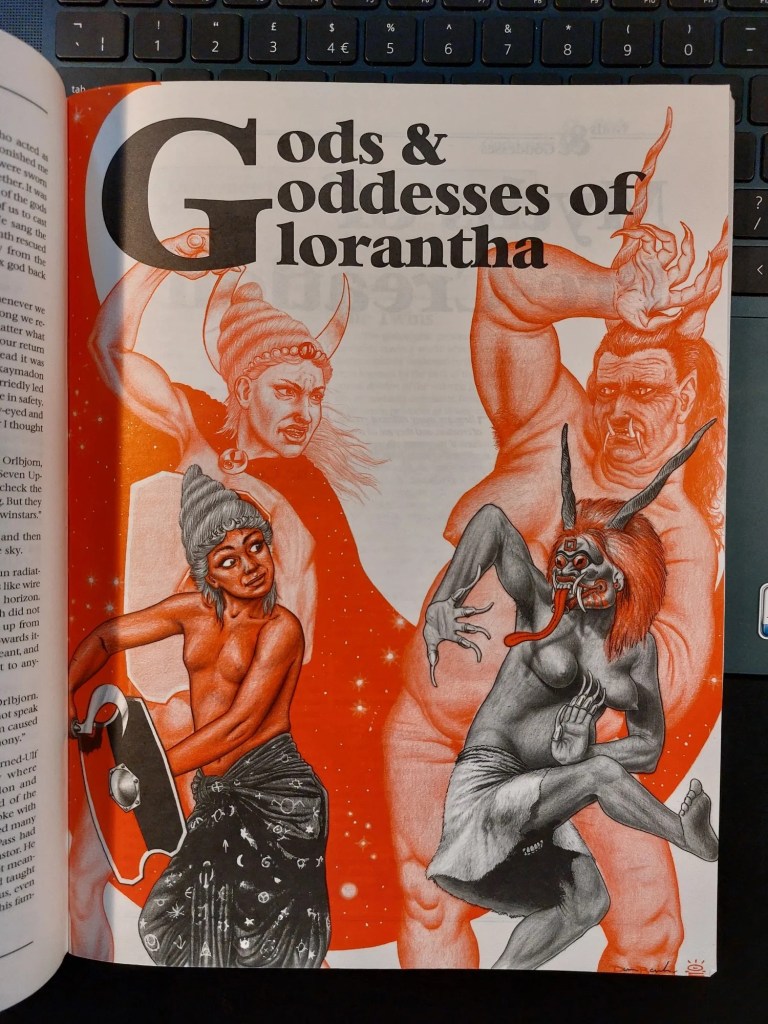
1. Contrast. It is “the technicolor cure for bland, pseudo-medieval generic fantasy”, to quote The Guide to Glorantha. People want something more than pap, something that feels distinctive and authentic.
And Glorantha sets itself apart in many ways: it’s a world of spirits, gods, myth, not a world of Paladins and Orcs. Its inspirations are ancient theist and timeless animist cultures. For me, by avoiding medievalism, it offers respite from cod-Christianity.
2. Breadth. There is a lot of it. And just as we enjoy travelling and exploring the real world, we enjoy having a fantasy world broad enough where we can do the same. We don’t travel to Paris expecting to find a building site and being asked to muck in and help build everything.
We expect to find a place where we can explore and find marvels, and we like that about Glorantha as a setting. It is ready-made (we may still find ourselves wandering down some empty streets and called upon to muck in and build stuff – but we get to choose).
3. Depth. Many people enjoy having something that is rich, and which rewards perseverance with revelation. At its worst, this descends into intellectual masturbation, treating the setting like a cryptic crossword, divorced from gameplay.
But at its best it allows games to switch effortlessly between registers: small and community-focused, national politics, monster-hunting, legendary battles, journeys into myth itself. Sometimes all at once, made possible because the depth is there, ready to plunge into.
4. Ambiguity. In many forms. The world is subjective at a metaphysical level. The contradictory myths of the sun-worshippers and the trolls are both true. The setting inherently resists definition, notwithstanding recent efforts by Chaosium to go the opposite way in the name of accessibility.
It’s also morally ambiguous. People within the setting appear at first to be good or bad, and it’s tempting to cheer for one side, but longer exposure reveals a much more nuanced take on moral certainty.
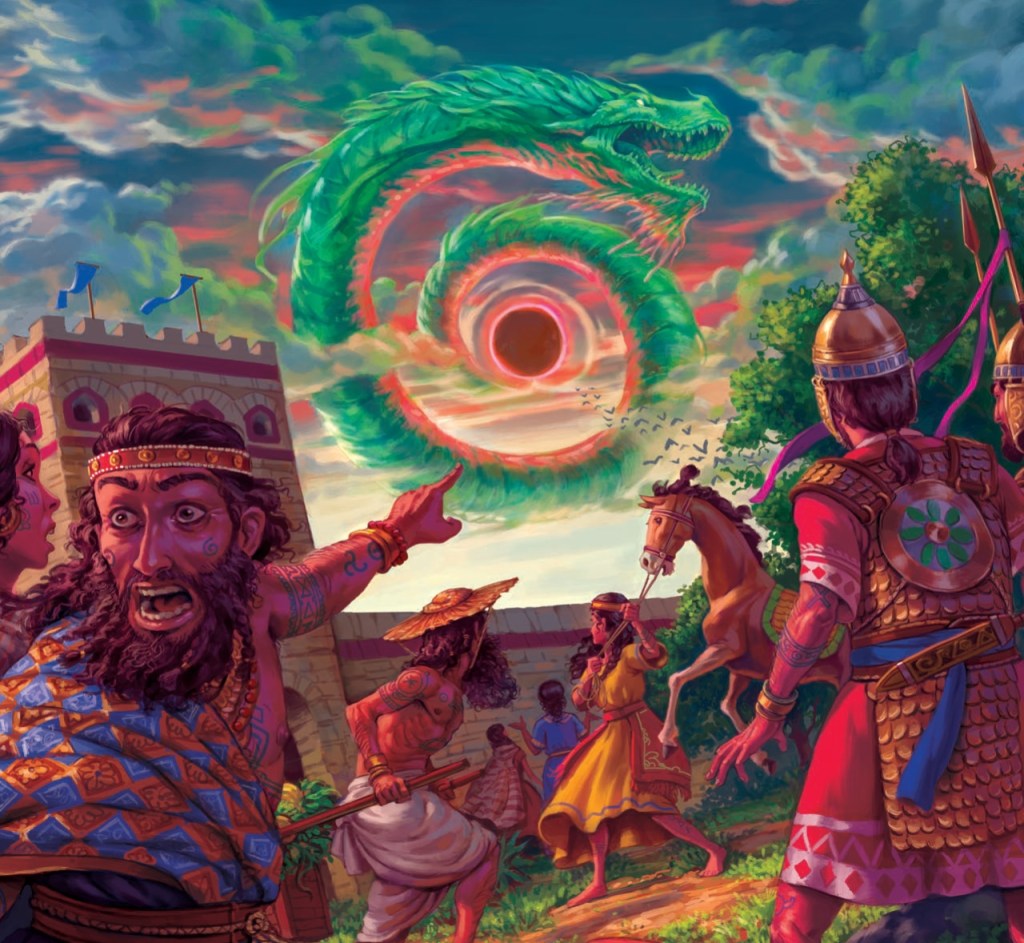
The good guys do bad things. The bad guys are progressive and inclusive. I enjoy a world where moral certainty is undermined, because I think it teaches us lessons for how we should avoid moral puritanism in real life.
5. Constraints. The idea that constraints are just a negative is for the birds. “Great art likes chains. The greatest artists have created art within bounds. Or else they have created their own chains.” – Nadia Boulanger.
Those points of a setting that we choose to treat as fixed provide the grid over which we overlay our own creativity. Famously, Your Glorantha Will Vary, but the interest lies in choosing how it varies and how it still remains Glorantha.
6. Diversity. Elements of the setting (but far from all) exhibit a sensibility that is progressive, feminist, open regarding gender and sexuality. Cultures are diverse, and as suggested above, none of them are unambiguously morally superior.
7. Immersion. Back in the day (late 80s / early 90s), Paul Mason’s fanzine Imazine talked about a type of RPG that might be called a “culture game”. The idea is that you enter into not just a setting, but a culture that is rich and different from your own.
The idea is that this is inherently interesting and worthwhile. Glorantha can be an old-school dungeon-bashing RPG, if you want, but it needs its richness to function well as a culture game.
8. Humour. This is where it scores against Tékumel, Jorune etc. The setting as we see it today evolved partly out of traditional late-70s / early-80s beer-and-pretzel gaming, and so it’s cut through with content that is, frankly, silly.
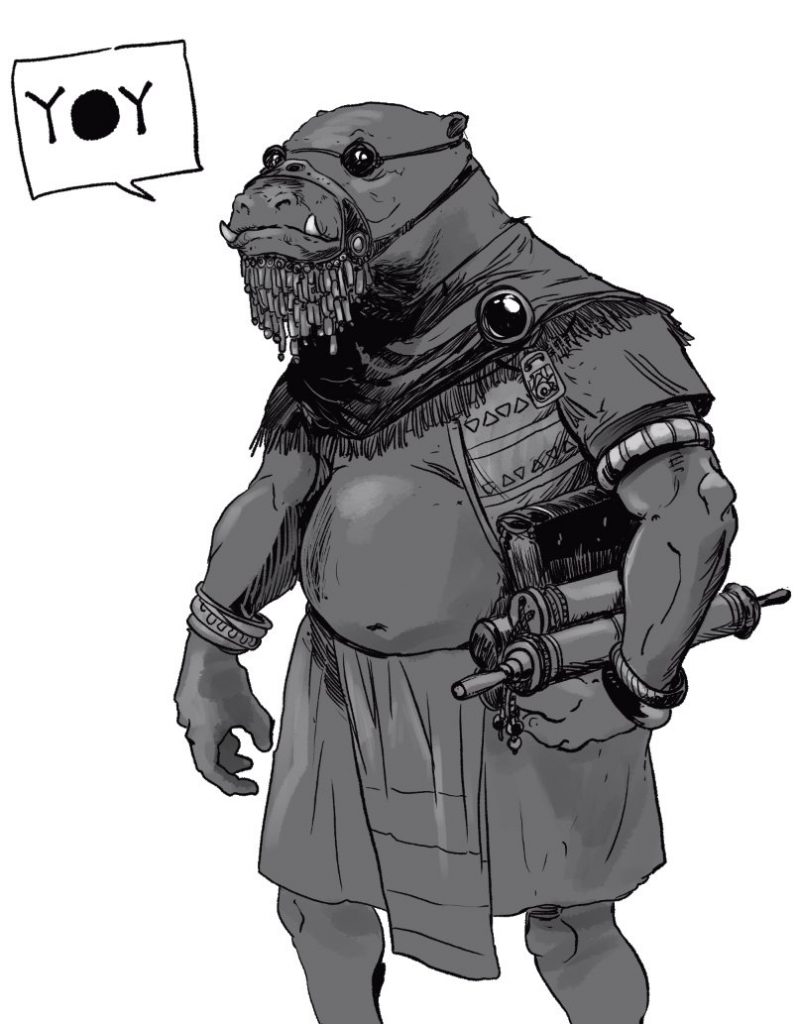
It’s like the light-relief of the comic characters in Shakespeare: something for all the audience, an amusing way in, continued recognition that we encounter the setting through banter around a real or virtual table.
Does Glorantha appeal differently to you? Please feel free to add something in the comments.


Leave a Reply